



The moment you realize the decisions you've been defending aren't actually yours, and the version of you that quietly disappears in the process.
Who Was That Decision Really For?
The boardroom is unbearably quiet. Eight faces across the table, waiting for you to begin. Is today the day they figure out you were a teacher three years ago
Quarterly growth has been slow and linear. Almost down-trending. You’re working out a different playbook and the math hasn’t added up the way it should. By that definition, the company ‘isn’t working’. If the company isn’t thriving, you’re failing. That’s bull and you know it, but it still feels like you’re losing your identity, rehearsing investor language during your morning shower, inching closer to becoming someone you don’t recognize.
The podcast you listen to on your morning commute or the Slack community where every thread is about Series A-B. The conference where every panel discussion is about scaling, but never about whether you should.
Everything you read, hear, and get told is shaped by what investors care about — growth rates, TAM, exits, fundraising readiness, AI integration.
The founder who built a credentialing platform because she saw broken workforce systems is being told to think about CAC and LTV ratios when her actual problem is that she can’t figure out whether to fire her co-founder.
The bootstrapped former educator who’s been told to read Crossing the Chasm, implement HubSpot, build a sales playbook. None of it feels right.
The one who loved her company before the acquisition. Now it’s quarterly targets.
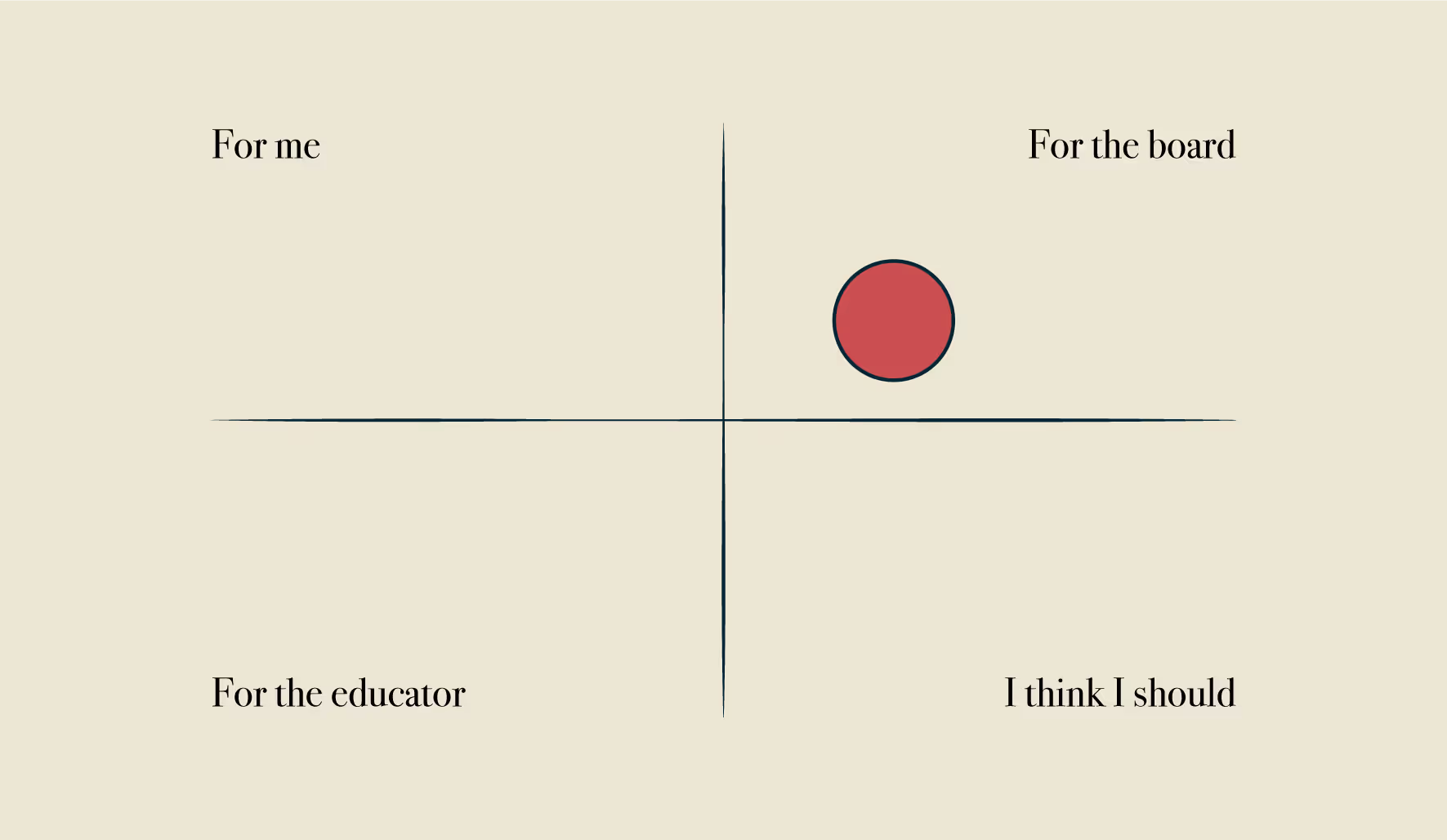
Who was that decision really for?
The investor asking about CAC isn’t wrong to ask. That’s their job — protect the investment, grow the return. The problem is the frequency you’re tuned into. You’ve had to learn which questions are taken seriously and which ones sound like doubt. “Should I fire my co-founder” becomes a question you ask your spouse at 11pm after it’s kept you up until 2am for two weeks straight, not your board at 10am. Not because it’s less important. Because it doesn’t fit the room.
I don’t want you to evaluate whether the decisions you’ve been making have been right or wrong right now. Instead, notice who you were making those decisions for.
You probably didn’t love the answer.
The Bad news.
- It isn’t that you don’t know what needs to change. You probably do. You’ve probably known for a while. The bad news is that knowing doesn’t help, because the resistance isn’t about what you know. The answer requires disappointing people whose approval you’ve spent years earning. And every quarter you keep optimizing for their scoreboard instead of yours, it compounds. Not just strategically. It gets harder to remember what your scoreboard even looked like.
- When you try to resolve the discomfort by getting more certain before you act (more research, more analysis, more frameworks), you’re actually deepening the paralysis. It feels like progress. It’s not. It’s just a sophisticated form of avoidance. The courage isn’t about leaping into the unknown. It’s about acting on what you already know before you feel ready.
The Good news.
- Serving one master is better than serving two. Or four. The path you’re afraid of is actually less work than the path you’re on. Not because the decisions got easier but because you finally have a set criteria. You win more, not despite the narrower focus, but because of it. You wake up on Tuesday, and you get to be the same person as you went to bed. You say what you actually think instead of translating it into boardroom language first. Not easier emotionally. But simpler structurally. And simpler tends to win over time.
- Conviction is more compelling than compliance. You don’t lose credibility when you stop performing. You’ll gain it. The board member who’s been getting the performance? They can tell. They’ve always been able to tell. The version of you that actually knows what you’re building is the one they’ll back.
Right now you’re probably building your case for why this doesn’t apply to you. It might not. You’re going to walk into a room this week. You’re going to get asked a question or face a decision. The only thing that’s different is that now you’ll notice who you’re making it for. You can’t ‘unnotice’ that.