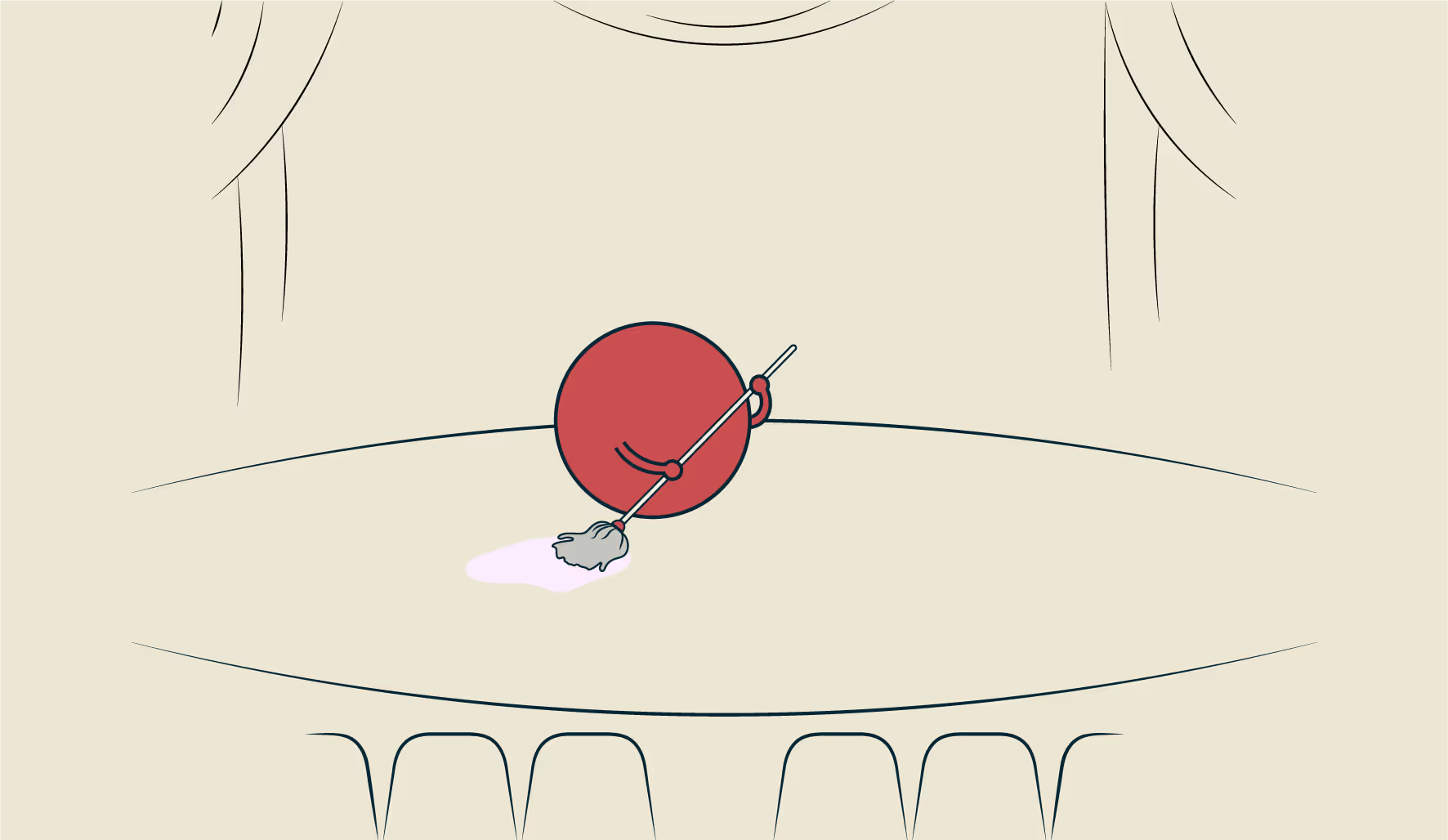




The thing that surfaces at 11pm and gets buried by 8am. The decision you already know you need to make but haven't.
The Less Applause-worthy Work
I'm quite good at this avoidance thing. My own particular version is an unhealthy amount of righteous frustration watching founders who can't see what I can see, instead of doing the slower, less applause-worthy work of being useful to people who are ready. It feels like discernment. But it’s probably arrogance, and it costs me.
I was recently introduced to the idea of 'lowering your standards' — David Baker's phrase, not mine — and hated it at first. What landed for me was: be realistic about your role in this world. Stop trying to change the world out there while losing the world you currently live in.
The EdTech founders I watch do a version of the same thing. The ones who stay busy with the defensible work (the work that looks like progress nobody will ever question) while the one thing that would actually change their trajectory sits untouched. Not because they don't know what it is. They probably do.
The quiet work isn't hard because it's complicated. It's hard because it requires becoming a more specific version of the person who started the company.
There's a texture to the thing you're avoiding.
Example 1: You serve K-12 but you’ve never wanted to be more specific than that. You could probably name the type of school that gets the most from what you do. To say who you're for is to say who you're not for, and that feels like losing.
Example 2: Your cofounder is building a different company than you are. You both know it. Neither of you wants to be the one who names it.
Example 3: You don't ask the customer what they actually need because you're afraid the answer isn't the thing you built. It's easier to keep telling yourself they just haven't figured out how to use it yet.
Whatever it is, you can probably name it right now without thinking very hard. It's the thing that surfaces at 11pm and you bury by 8am because there are meetings to attend and features to ship and a business to run.
The reason this works, and why I fall for it too, is that nobody ever questions the work at a decision level. The quiet work (sitting with a hard decision, having an honest conversation, admitting you don't know) produces nothing immediately visible. There's no conference panel called "I finally had the conversation I'd been avoiding for six months.” Maybe I should start that group, who knows if anyone would show up.
A decade from now, the founders I work with probably won't remember the framework we used or the decision we landed on. Some might, but most won't. They will remember whether I asked them the right question at the right time. That's a smaller job than I sometimes want it to be. And it's plenty.
I don’t think I need to calculate ROI on avoidance. Just know that it compounds. It doesn't break anything. It just makes everything slightly harder. And then one day you realize you've been running hard for a year and you're in roughly the same place. Just more tired and with fewer options.
If you know there’s one constraint in the business that’s been bugging you that you haven’t dealt with yet, what do you think’s stopping you?
If something in this landed, you can find more of this kind of thinking in short form on LinkedIn.
If you want to work together, here's what that looks like:
1:1 Clarity Session — 50 minutes, one decision. $2,500.
Performance Diagnostic — The 3-5 metrics that actually predict where you're headed. $5,000.
Business Deep Dive — Positioning, product, and creative strategy across 4 modules. $25,000.
If none of those fit, that's fine. The newsletter isn't going anywhere.
— Chris
Founder | Juniper